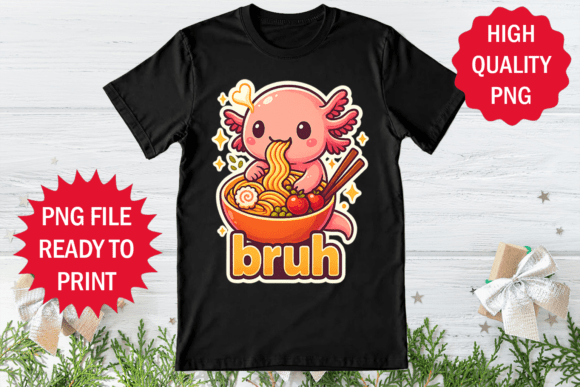
Bruh Axolotl Funny Eating Ramen Shirt
When I first opened the Bruh Axolotl Funny Eating Ramen Shirt file, my initial reaction wasn't just about the cute subject matter, but about its potential viability as a serious embroidery project. As someone who has stitched thousands of designs for clients ranging from boutique owners to hobbyist crafters, I know that a graphic that looks great on a screen doesn't always translate well to thread. This design falls under the Freebies and Graphics category, which often implies it might be a quick download without much technical documentation. However, looking at the visual personality of this axolotl enjoying a bowl of ramen, there is genuine charm here that could elevate a small business inventory if handled with care.
The mood of the Bruh Axolotl Funny Eating Ramen Shirt is undeniably playful and trendy. It captures a specific internet culture vibe that resonates strongly with younger demographics and those who appreciate quirky, whimsical aesthetics. For an embroidery designer, the layout suggests a character-centric piece rather than heavy text or complex geometric patterns. The appeal lies in the delightful expression of the axolotl, making it perfect for personalized gifts, custom apparel, or even nursery decor where a touch of humor is welcome. But before you commit to stitching this onto a premium hoodie, we need to dissect how this design behaves in a real-world production environment.
From Screen to Stitch: Real-World Application
I recently had a scenario where a client wanted a custom embroidered tote bag for a local pop-up shop. They needed something that stood out but wouldn't cost a fortune in thread or machine time. The Bruh Axolotl Funny Eating Ramen Shirt immediately came to mind. Imagine a sturdy canvas tote bag featuring this colorful graphic. The contrast between the vibrant colors of the axolotl and the neutral fabric would create a striking finished product. In this context, the design acts as a conversation starter, perfectly aligning with the goals of an Etsy seller or a craft fair vendor looking to increase buyer engagement.
However, the execution matters immensely. When I tested the concept mentally against a sweatshirt, the density of the fill stitches required to render the "delightful" details becomes apparent. If the design relies heavily on small, intricate lines to define the ramen bowl or the axolotl's gills, it might suffer on thick fabrics like fleece. The key here is understanding the difference between a digital graphic and a machine embroidery design. A good embroidery file must account for the physical limitations of the needle and thread. If the original graphics are too detailed, they may blur together when stitched, losing the "funny" expression that makes the design special.
This design also shines brightly on smaller items like caps or patches. An embroidered patch featuring the ramen-eating axolotl could easily become a bestseller for vintage-style jackets or denim vests. The compact nature of such items often forces designers to simplify complex images, but if the Bruh Axolotl Funny Eating Ramen Shirt retains its clarity in a reduced size, it offers incredible value. It transforms a simple accessory into a statement piece, boosting the perceived quality of the handmade product.
Navigating Fabric and Technique Challenges
Not every surface is created equal, and knowing where to apply the Bruh Axolotl Funny Eating Ramen Shirt is just as important as knowing where to avoid it. One of the most common pitfalls in commercial embroidery is attempting to stitch detailed graphics on stretchy or thin fabrics. If you try to put this design on a lightweight t-shirt without proper stabilization, the tension will likely cause puckering, ruining the delicate features of the axolotl's face.
Furthermore, dark fabrics present a unique challenge. While the description mentions "colorful," the visibility of the thread colors depends entirely on the background. On a black shirt, you will need a high-quality underlay and potentially more thread layers to ensure the colors pop. Conversely, on light fabrics, the design might appear washed out if the thread choice isn't vibrant enough. I always advise checking the thread colors against your intended fabric before starting a large run. A printable mockup can help visualize this, but nothing beats a test run on scrap material.
Another area requiring caution is the hoop size. If the design includes fine details like the steam rising from the ramen or tiny facial expressions, a small hoop might not provide enough stability, leading to registration issues where the colors don't line up correctly. For larger projects like pillow covers or kitchen towels, the stability is usually better, but you must ensure the fabric texture is smooth enough to accept the satin stitch and fill stitch cleanly. Textured fabrics, such as heavy wool or coarse linen, can hide the intricacies of the design, making it look muddy rather than crisp.
Practical Notes for the Professional Designer
Before you rush to sell this as part of your craft business or add it to your digital product previews, there are several technical steps you must take. First and foremost, always test the embroidery project on scrap fabric. This is non-negotiable. You need to verify the stitch density to ensure the fabric doesn't pucker and that the design holds its shape after washing. Check whether the design works for both personal use and commercial projects by reviewing the licensing terms provided with the download. Many freebies come with restrictions that prevent selling finished items, so confirm these details to avoid legal headaches.
If you are planning to use this for holiday embroidery or wedding gifts, consider the durability of the finish. Will the design withstand frequent washing? Dense stitch areas can trap lint and wear down faster if not executed properly. Using the right stabilizer is crucial here; a cut-away stabilizer might be necessary for items that will see heavy use, while a tear-away might suffice for decorative pillows. Also, inspect small details closely. Sometimes, what looks like a single line in a digital image breaks down into multiple tiny stitches that can snag or break during the process.
For those selling on platforms like Etsy, the presentation of the finished product is key. A well-executed Bruh Axolotl Funny Eating Ramen Shirt design on a high-quality item can justify a higher price point and build customer trust. It shows attention to detail and professionalism. However, if the stitching is sloppy or the colors are dull due to poor file conversion, it can damage your brand reputation. Compare light and dark fabric backgrounds to ensure the design remains versatile across different product lines.
Ultimately, the Bruh Axolotl Funny Eating Ramen Shirt is a charming asset for any creative entrepreneur. Its whimsical theme fits seamlessly into categories like baby embroidery, tote bag design, and sweatshirt embroidery. By treating it with the same rigor as any paid design asset—testing, stabilizing, and refining—you can turn a simple freebie into a profitable, high-quality addition to your portfolio. Just remember that the magic happens in the execution, not just the download.