Cute Farm Animal Clipart Pack Review for Embroidery
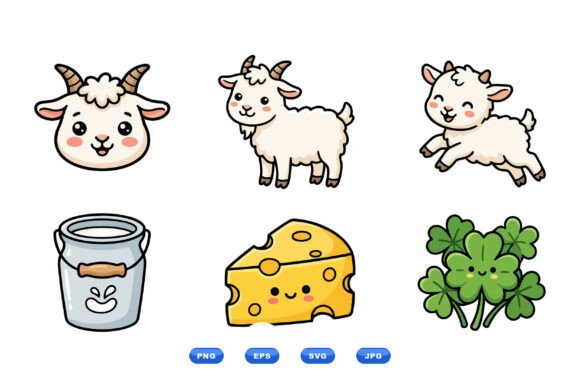
As a designer who has spent years turning digital files into stitched reality, I know that the difference between a good design and a great finished product often comes down to one thing: suitability. You can have the most beautiful vector illustration in the world, but if it doesn't translate well to thread, it becomes a headache rather than a profit center. Recently, I took a close look at the Cute Farm Animal Clipart Pack, specifically focusing on how its smiling goat characters, milk pail, wedge of cheese, and lucky clover elements perform when moved from a screen to an embroidery machine.
This collection is marketed as a kawaii flat vector sticker sheet perfect for kids branding and playful packaging. While that description holds true for print, my job was to evaluate it as a potential machine embroidery design. Does this cheerful aesthetic survive the transition to fabric? Can it hold up under the tension of stitching, or does it risk becoming a tangled mess of threads?
The First Stitch: Visual Personality and Mood
The immediate impression of the Cute Farm Animal Clipart Pack is undeniably warm. The smiling goat characters exude a friendly, approachable vibe that immediately signals "whimsy." In the world of embroidery project planning, mood is everything. This pack screams nursery decor, children's apparel, and boutique gift items. It feels like a design that belongs on a soft cotton onesie or a colorful tote bag rather than a corporate polo shirt.
The flat vector style is a double-edged sword. On one hand, the clean lines are easy to digitize with precision. On the other, the lack of intricate shading means the final result relies heavily on color choices and stitch types. When I imagine this as a finished product, I see a high level of recognition. Customers browsing Etsy or a craft fair booth will stop because the imagery is instantly understandable. There is no ambiguity here; it is pure, unadulterated cuteness. For small business owners looking to create a cohesive brand identity, this Graphics set offers a consistent visual language that is hard to beat.
Real-World Scenario: The Custom Tote Bag Project
To truly test the viability of this embroidery file, I ran a mental simulation based on a real-life scenario I encounter frequently: creating custom merchandise for a local bakery or a children's boutique. Imagine you are preparing a batch of embroidered tote bags for a holiday market. You need something that appeals to parents and kids alike, something that looks handmade but professional.
Using the Cute Farm Animal Clipart Pack for this project makes sense. The smiling goat and the wedge of cheese could be arranged in a playful cluster on the front pocket of a canvas tote. The key here is the layout. Because the original assets are part of a sticker sheet, they are designed to stand alone. However, when converting this to a commercial embroidery piece, you must consider how the individual elements interact. A single goat character might look too sparse on a large bag, whereas combining the goat with the milk pail creates a balanced composition.
I also considered the texture of the fabric. Canvas is sturdy, which is ideal for holding the density required for these shapes. If I were to use this design on a sweatshirt, the soft fleece would provide a nice contrast to the smooth satin stitches of the goat's face. The lucky clover adds a touch of whimsy that works perfectly for a St. Patrick's Day promotion or just general good luck branding. The visual appeal is high, and the potential for customer engagement is significant because the subject matter is universally loved.
Navigating Technical Challenges and Limitations
While the concept is sound, every experienced designer knows that execution is where things get tricky. There are specific areas where the Cute Farm Animal Clipart Pack requires careful handling. If you plan to use this for embroidered patches or small accessories, you must be mindful of the detail level. Kawaii designs often rely on simple shapes, but if the digitizer tries to add too much complexity to capture the "smile," the stitch density might become too high for small hoops.
One critical factor is the fabric texture. If you attempt to stitch this on a thin, stretchy fabric like a jersey knit without proper stabilization, the goat's ears or the curve of the milk pail could distort. The running stitch used for outlines might pucker if the stabilizer isn't rigid enough. Similarly, using this design on dark fabric presents a challenge. Flat vector art often lacks the heavy fill needed to cover dark backgrounds effectively. You may find that you need multiple layers of thread or a backing material to ensure the colors pop, which can increase the time and cost of production.
Curved surfaces, such as caps or hats, also demand attention. While the roundness of the goat's head fits a curved surface well, the straight lines of the cheese wedge might look awkward if not adjusted for the curvature of the hat. For baby embroidery, safety is paramount. Any loose threads or dense areas that could rub against sensitive skin must be avoided. Always inspect the digital embroidery file closely to ensure there are no tiny, sharp points that could snag.
Maximizing Value and Professionalism
When used correctly, this pack elevates the perceived value of your handmade product. A simple tote bag transforms into a premium item when adorned with high-quality, well-stitched graphics. The brand consistency offered by the matching elements (goat, cheese, clover) allows you to create a cohesive line of products, from aprons to pillow covers. This consistency builds trust with buyers who recognize your unique style.
However, to maintain that professionalism, you cannot simply import the image and hit start. You must review the thread colors carefully. Kawaii styles often rely on pastels and brights. Ensure that your thread selection matches the intended mood. A muddy brown goat will ruin the cheerful aesthetic. Furthermore, always test the design on scrap fabric first. Check the hoop size to ensure the entire motif fits comfortably without cutting off any essential details. If you are selling these as personalized gifts, make sure the text area (if added) does not clash with the busy nature of the animal characters.
Essential Designer Notes for Success
- Test Before You Commit: Always run a test stitch on a scrap piece of the actual fabric you intend to use. This reveals issues with puckering or thread breaks before you ruin a customer's order.
- Stabilizer Selection: Depending on whether you are working with stretchy fabric or a heavy towel, choose the right stabilizer. A tear-away might work for a tote, but a cut-away is better for baby clothes that will undergo frequent washing.
- Licensing Check: Before using this design asset for commercial purposes, verify the license terms. Some Illustrations allow personal use only, while others permit selling finished goods. Confirming this prevents legal headaches later.
- Mockup Visualization: Create black and white mockups to check the contrast and shape integrity. Sometimes, color distracts from structural flaws that become obvious once the design is converted to thread.
- Density Management: Review the fill stitch density. If the design is too dense, it will feel stiff and uncomfortable. If it is too light, it may look patchy. Adjust the settings to achieve a balance that suits the garment type.
In conclusion, the Cute Farm Animal Clipart Pack is a versatile and charming addition to any craft business toolkit. Its kawaii aesthetic is perfectly suited for the current market trends in children's wear and home decor. By understanding its limitations regarding fabric type and hoop size, and by applying rigorous testing protocols, you can turn these digital graphics into stunning, tangible memories for your customers. Whether you are an Etsy seller or a hobbyist maker, this pack offers a solid foundation for creating delightful, high-value embroidered projects.